The 7 Best Ways to Learn Crypto Trading for Beginners in 2026

Learning how to trade crypto in 2026 can seem overwhelming at first, especially with all the new tools and strategies popping up every year. If you’re just starting out, you might be wondering where to even begin. There’s a lot of noise out there, but the good news is, you don’t need to know everything at once. Here are seven of the best ways to approach how to learn crypto trading for beginners, each with its own style and pace. Try a few, see what fits, and remember: everyone starts somewhere.
Key Takeaways
-
Start with one strategy and stick to it until you understand how it works.
-
Practice trades using demo accounts before risking real money.
-
Keep your emotions in check—don’t chase hype or panic during dips.
-
Learn to read charts and use simple indicators, but don’t overcomplicate things.
-
Always use money you can afford to lose, and set clear limits for yourself.
1. Scalping
Scalping is a fast-paced trading approach where you aim to profit from very small price movements in highly liquid cryptocurrencies like Bitcoin, Ethereum, or Solana. In scalping, you're usually in and out of the market within minutes—sometimes even seconds—trying to catch tiny shifts in price. This style isn’t about holding for hours, and it’s definitely not about waiting for weeks. You set up shop on short timeframes, usually one- to five-minute charts, and focus on capturing these micro-movements repeatedly throughout your session.
Here’s what you need if you’re thinking of giving scalping a try:
-
Fast, stable internet and a responsive trading platform
-
Tools for real-time market data (like order book and price heatmaps)
-
Automated stop-loss features to limit your losses on sudden moves
-
Low trading fee exchanges, since high fees can eat your profits
Key Tools for Scalping (2026) | Purpose |
|---|---|
Real-time Depth-of-Market (DOM) | See market liquidity fast |
AI-powered Volatility Analysis | Spot micro-shifts in price |
Auto Stop-Loss Orders | Protect from sudden drops |
Tight Bid-Ask Spreads | Lower cost per trade |
Scalping’s big appeal is that you get a lot of chances to trade and, if you stick to your approach, those many small wins can add up over a day. But it’s definitely not stress-free. You need to stay alert, react quickly, and be okay with seeing lots of tiny profits (and occasional losses) instead of a big score.
Many beginners jump into scalping expecting quick gains, but without strict discipline and cost control, fees and hasty trades can wipe out gains before you even realize it.
If you’re someone who enjoys staying active, likes the challenge of fast decisions, and can take the emotional ups and downs, scalping could be worth exploring on your crypto trading journey.
2. AI-Driven Agentic Trading

AI-driven agentic trading is changing the way beginners and pros interact with crypto. Instead of following rigid rules, these AI-powered agents look at tons of data—from market trends to whale moves on the blockchain—and figure out the right time to act. What sets these tools apart is their ability to monitor, analyze, and execute trades all day and night, without getting tired or emotional.
Here’s a quick breakdown of what makes AI agentic trading special in 2026:
-
Market monitoring never sleeps; algorithms check prices and liquidity across many exchanges, alerting you the instant it matters.
-
Personalization is at the core: you set your goals and preferences, not just a price target. The AI adapts to execute trades matching those intentions, even as market conditions change.
-
Sophisticated machine learning helps AI agents spot patterns and risks that people often miss, especially in fast, unpredictable crypto environments.
Feature | Manual Trading | AI Agentic Trading |
|---|---|---|
Hours monitored | Limited by user | 24/7 continuous analysis |
Decision-making | Based on human | Machine learning-driven |
Reaction speed | Human reaction | Instant, automated |
Emotional impact | Subject to emotion | Emotionless execution |
AI-driven bots aren't magic money machines—they still make mistakes if the market shifts suddenly, or if the setup is flawed. The trick is learning to trust the system, but always auditing for weird results or unexpected losses.
If you’re curious about the mechanics and potential pitfalls, see how crypto AI trading bots work for a nuts-and-bolts explanation. Getting comfortable with AI-driven approaches might feel weird at first, but as automation keeps evolving, it’s a skill worth picking up for long-term success.
3. Day Trading
Day trading in crypto is all about making moves within a single day. The main idea is to open and close your trades before the 24-hour clock runs out. This way, you avoid any surprises that might pop up overnight, like big price swings or news that could affect your holdings while you're asleep. It's like being a sprinter in the crypto world – quick bursts of activity.
Most day traders really lean on technical analysis to figure out what's going on. They'll watch things like the RSI (Relative Strength Index) to see if a coin is getting too expensive or too cheap, and the MACD to get a feel for momentum. Pairing these with volume analysis is pretty smart, too. High volume can tell you if a price move is the real deal or just a temporary blip.
Here’s a quick rundown of what day traders often look for:
-
Clear Trend Signals: Spotting a strong upward or downward trend to jump into.
-
Entry/Exit Points: Finding the best moment to buy low and sell high within the day.
-
Volatility: Markets that move enough to offer profit opportunities.
-
Risk Management: Having a plan to cut losses quickly if things go south.
Speed and discipline are super important here. You can't really afford to hesitate or get emotional. That's why some traders use AI-powered alerts. These can ping you when specific conditions are met, like a certain indicator crossing a line, helping you act fast on the data instead of just guessing.
Day trading can be exciting because you're constantly engaged with the market. However, it demands a lot of focus and energy. You're basically glued to your screen, trying to catch those short-term price movements. It's not for someone who wants to set it and forget it.
4. Arbitrage
Arbitrage is a pretty neat trick for making money in crypto, and it's all about spotting tiny price differences for the same coin on different exchanges. Think of it like this: if Bitcoin is selling for $50,000 on Exchange A and $50,050 on Exchange B at the exact same moment, you could theoretically buy it on A and immediately sell it on B for a quick $50 profit. This strategy doesn't really care if the market is going up or down; it just needs those price gaps.
Because crypto markets are open 24/7 and can be a bit wild, these small price differences pop up more often than you might think. The catch is, these opportunities usually vanish super fast, sometimes in just seconds. Trying to do this manually is basically impossible. You'd need to be watching dozens of exchanges all at once, which is where specialized software or bots come in handy. These tools scan everything constantly, looking for those fleeting moments where you can buy low on one platform and sell high on another.
Here’s a simplified look at how it works:
-
Identify the Discrepancy: Your software finds a coin priced differently on two exchanges.
-
Execute Trades Simultaneously: You buy the coin on the cheaper exchange and sell it on the pricier one almost instantly.
-
Pocket the Profit: The difference in price, minus any trading fees, is your profit.
It sounds simple, but it requires speed and good execution. You also have to factor in transaction fees and potential slippage (where the price moves against you slightly between when you decide to trade and when the trade actually happens). It's a strategy that appeals to traders who like a more systematic approach rather than guessing market direction. Many traders use automated crypto trading bots to catch these opportunities because they're so fast.
Arbitrage trading is all about exploiting market inefficiencies. It's less about predicting the future price of an asset and more about executing trades quickly to capture existing price differences across different trading venues. This makes it a market-neutral strategy, meaning its success isn't tied to whether the overall market is bullish or bearish.
5. Swing Trading
Swing trading is a strategy where traders try to capture gains in a stock (or cryptocurrency) over a period of a few days to several weeks. Swing traders typically aim to capture a portion of a potential price move. They aren't trying to catch every little fluctuation like a scalper, nor are they holding for months or years like a position trader.
The core idea is to identify a trend and then ride it for a short to medium term. This approach balances the quick profits of short-term trading with the potential for larger gains from sustained price movements. It requires a good understanding of technical analysis, including chart patterns, support and resistance levels, and indicators like the RSI and MACD. You'll also want to keep an eye on market sentiment and relevant news, as these can significantly influence price swings.
Here’s a general breakdown of how swing trading often works:
-
Identify a Trend: Look for cryptocurrencies showing a clear upward or downward trend. This could be identified through chart patterns or moving averages.
-
Entry Point: Wait for a pullback or consolidation within the trend. This is often where you'll find a good entry point, buying on a dip in an uptrend or selling on a rally in a downtrend.
-
Set Stop-Loss: Always place a stop-loss order to limit potential losses if the trade goes against you. This is a non-negotiable part of risk management.
-
Set Take-Profit: Decide on a target price where you'll exit the trade to secure your profits. This could be based on resistance levels or a predetermined profit percentage.
-
Exit the Trade: Close your position when either your take-profit target is hit or your stop-loss is triggered.
Swing trading can be quite effective in the crypto market because of its inherent volatility. This volatility can create the price swings that swing traders look to capitalize on. However, it also means that risk management, especially using stop-losses, is super important. You don't want a sudden market shift to wipe out your gains or your capital. It's a good middle ground for beginners who want more than just holding but aren't ready for the intense pace of day trading. Learning how to swing trade cryptocurrencies can be a solid step in your trading journey.
Swing trading involves holding positions for days or weeks, aiming to profit from anticipated price movements within a larger trend. It requires patience to wait for the right entry and exit points, and discipline to stick to your trading plan and manage risk effectively.
6. Position Trading
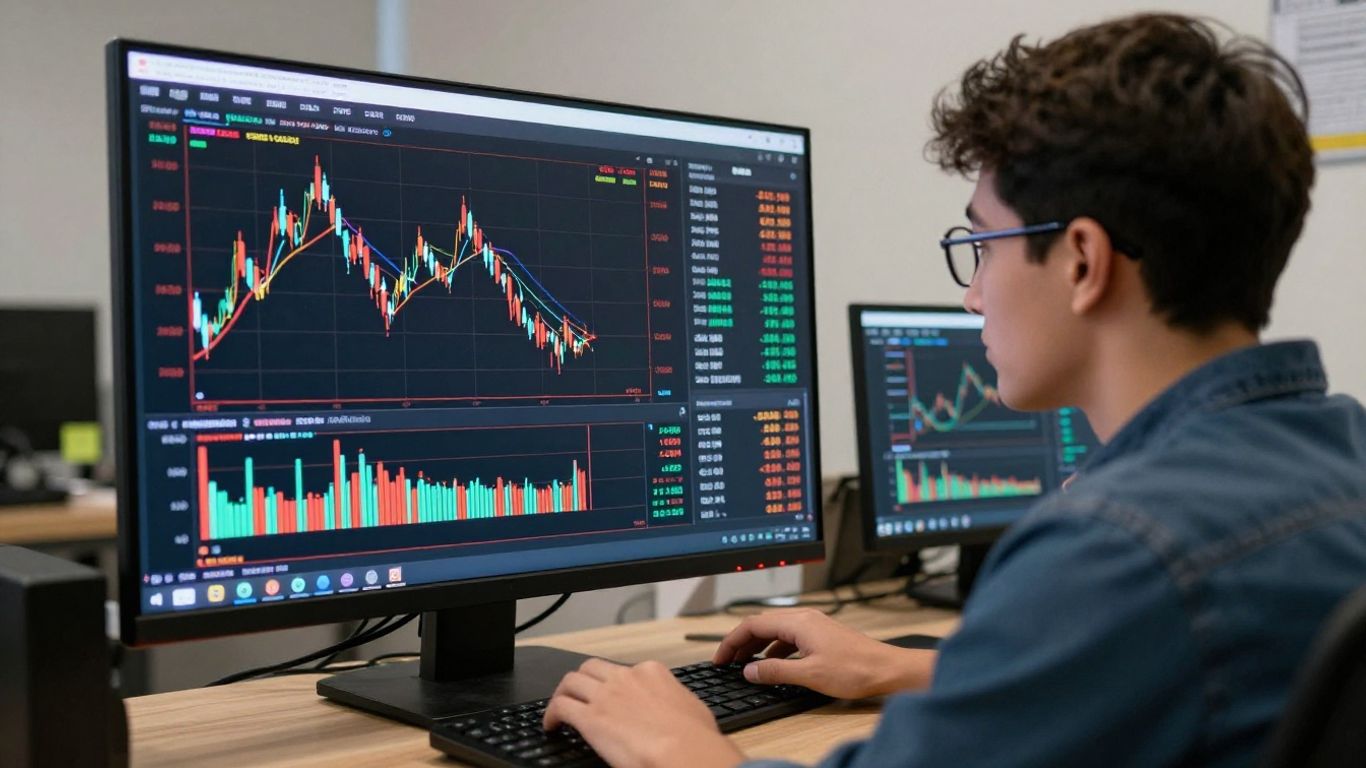
Position trading is all about holding your trades over the long term—think weeks, months, or maybe even longer if things keep heading the right way. Unlike day traders, you won’t be glued to your screen, stressed about every move. Instead, you make fewer trades and let the market play out.
Here's what sets position trading apart:
-
You focus on big trends, not tiny price swings.
-
Fundamental analysis matters more than technical day-to-day charts.
-
Patience is a must; this style isn't for those who crave daily action.
-
You need to stomach big price swings, since crypto can be wild even over long periods.
Feature | Position Trading |
|---|---|
Typical Trade Length | Weeks to Several Months |
Main Tools | Fundamental Analysis, Macro News |
Trade Frequency | Low |
Time Commitment | Low to Moderate |
Position traders often do their own research and don't usually react to announcements or hype. They watch for bigger-picture things—like industry adoption, regulation, or major upgrades to a blockchain.
Most losses come from not closing a losing trade early or getting caught up in someone else’s excitement—make sure your choices are based on real conviction, not just outside noise.
From my experience, position trading helps take the pressure off the constant crypto price rollercoaster, but it's not as simple as "set it and forget it." You've got to keep up with the market—just not every minute. When in doubt, always double-check your original reason for holding a position.
7. HODL
HODL, a term that started as a typo for "hold," stands for "Hold On for Dear Life." It means buying cryptocurrency and keeping it for a long period, no matter what happens in the market, because you believe in its future. HODLing is less about playing the market and more about staying strong through all the wild price swings.
With HODLing, you’re not glued to the screen tracking every little price jump or crash. You choose your top coins, maybe Bitcoin or Ether, and you stash them in a wallet. Then you wait. Sometimes that means months—or even years—without touching them. In 2026, with so many people trading every day, sticking to a HODL strategy can feel almost rebellious.
HODL for beginners usually means:
-
Picking a few cryptocurrencies with strong potential (not just chasing hype)
-
Ignoring short-term price dips or spikes—they’re part of the game
-
Staying patient, even when others panic or brag about quick wins
-
Using secure wallets, not leaving your coins sitting on an exchange
Here’s what HODL looks like compared to active trading:
HODL | Active Trading |
|---|---|
Infrequent action | Constant buying/selling |
Lower fees | Higher transaction costs |
Lower stress | Often stressful |
Time horizon: years | Time horizon: hours to weeks |
Waiting isn't exciting, but sometimes it's the simplest approach that does the trick—especially when the market is full of hype and noise. If you trust the fundamentals, sometimes the best move is to just sit tight and let your assets grow over the long run.
Conclusion
Learning crypto trading in 2026 can feel overwhelming at first, but it gets easier with time and practice. There’s no single path that works for everyone. Some people like to start with demo accounts, others jump right into small trades. The most important thing is to pick a strategy that fits your style and stick with it long enough to see what works. Mistakes will happen—everyone makes them. The key is to learn from them and not let emotions take over. Keep your trades small at the beginning, do your own research, and don’t trust every tip you see online. Over time, you’ll get better at spotting trends and managing risk. Crypto markets move fast, so patience and discipline matter more than chasing quick wins. Stick with it, keep learning, and remember: it’s a marathon, not a sprint.
Frequently Asked Questions
What is the easiest way for beginners to start crypto trading?
The easiest way for beginners is to start with simple strategies like HODL, where you buy and hold your crypto for a long time. This lets you learn about the market without having to make fast decisions.
Can I make money quickly by trading cryptocurrencies?
While some people do make quick profits, crypto trading is risky and prices can change fast. Most experts recommend learning the basics and starting small so you don't lose more than you can afford.
How much money do I need to start trading crypto?
You don't need a lot of money to start. Many exchanges let you begin with as little as $10 or $20. It's smart to start small while you learn how trading works.
What tools or skills do I need for crypto trading in 2026?
You'll need a good internet connection, an account on a trusted exchange, and some basic knowledge of market charts. In 2026, using AI-powered tools can help you spot trends and make better decisions, but you should still learn the basics yourself.
Is crypto trading safe for beginners?
Crypto trading has risks, especially because prices can change a lot in a short time. It's important to only trade money you can afford to lose and to do your own research before making trades.
What is the difference between scalping, day trading, and HODL?
Scalping means making lots of quick trades to earn small profits. Day trading is buying and selling within the same day to catch price moves. HODL means buying and holding onto your crypto for months or years, ignoring short-term changes.